4 downloads · 3 visualizações
SAÚDE MENTAL NA ATIVIDADE POLICIAL MILITAR: UMA REVISÃO INTEGRATIVA DOS FATORES DE RISCO E DAS ESTRATÉGIAS DE PREVENÇÃO
GILBERTO DE ALBUQUERQUE LÚCIO, YALISSON FRANKLIN DO NASCIMENTO FERNANDES · 2025
Orientador(es): ALESSANDRO HENRIQUE DE ANDRADE · Área: Ciências da Saúde
Resumo
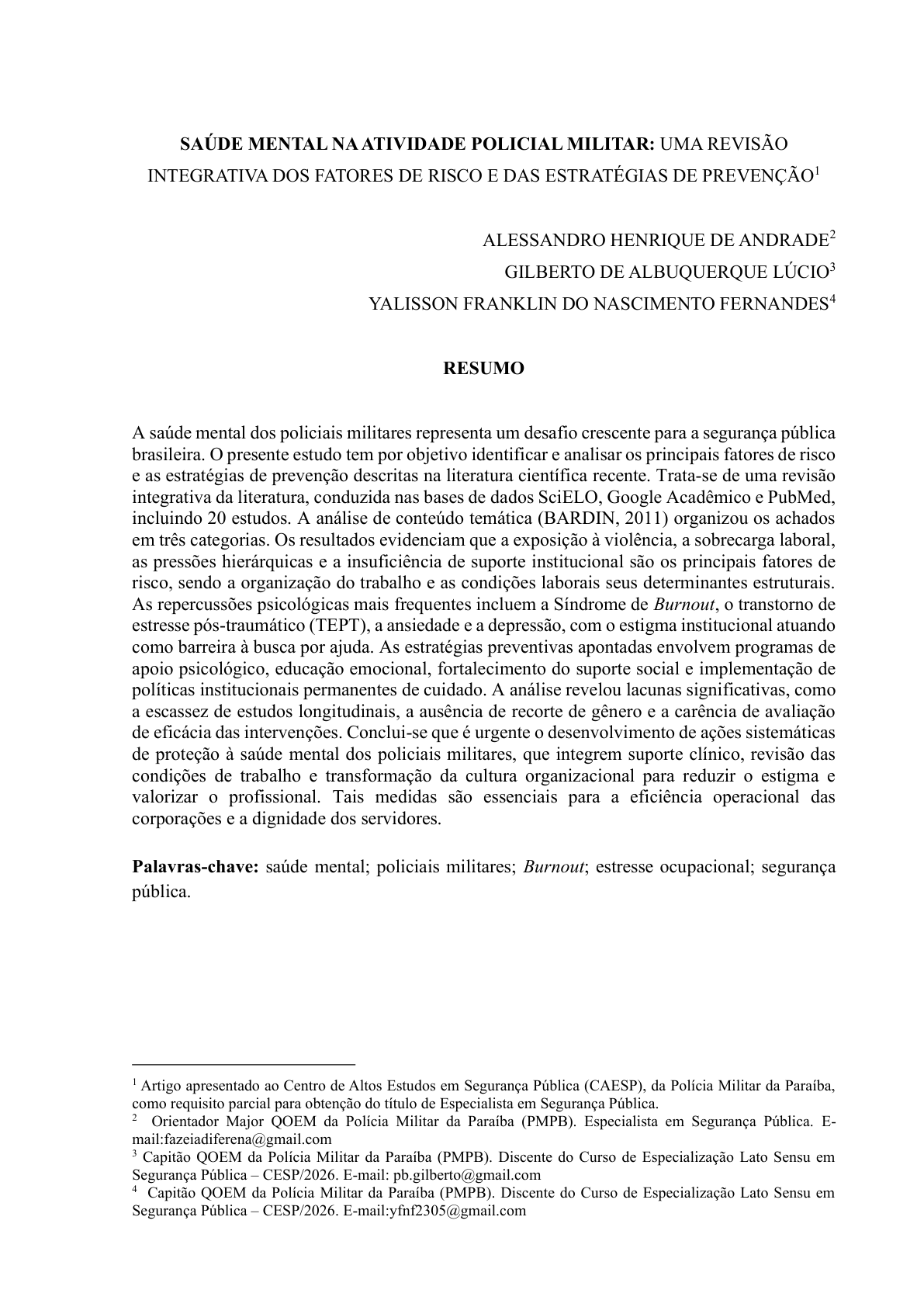
A saúde mental dos policiais militares representa um desafio crescente para a segurança pública brasileira. O presente estudo tem por objetivo identificar e analisar os principais fatores de risco e as estratégias de prevenção descritas na literatura científica recente. Trata-se de uma revisão integrativa da literatura, conduzida nas bases de dados SciELO, Google Acadêmico e PubMed, incluindo 20 estudos. A análise de conteúdo temática (BARDIN, 2011) organizou os achados em três categorias. Os resultados evidenciam que a exposição à violência, a sobrecarga laboral, as pressões hierárquicas e a insuficiência de suporte institucional são os principais fatores de risco, sendo a organização do trabalho e as condições laborais seus determinantes estruturais. As repercussões psicológicas mais frequentes incluem a Síndrome de Burnout, o transtorno de estresse pós-traumático (TEPT), a ansiedade e a depressão, com o estigma institucional atuando como barreira à busca por ajuda. As estratégias preventivas apontadas envolvem programas de apoio psicológico, educação emocional, fortalecimento do suporte social e implementação de políticas institucionais permanentes de cuidado. A análise revelou lacunas significativas, como a escassez de estudos longitudinais, a ausência de recorte de gênero e a carência de avaliação de eficácia das intervenções. Conclui-se que é urgente o desenvolvimento de ações sistemáticas de proteção à saúde mental dos policiais militares, que integrem suporte clínico, revisão das condições de trabalho e transformação da cultura organizacional para reduzir o estigma e valorizar o profissional. Tais medidas são essenciais para a eficiência operacional das corporações e a dignidade dos servidores.
Abstract
The mental health of military police officers represents a growing challenge for Brazilian public security. This study aims to identify and analyze the main risk factors and prevention strategies described in recent scientific literature. This is an integrative literature review conducted in the SciELO, Google Scholar, and PubMed databases, including 20 studies. The thematic content analysis (BARDIN, 2011) organized the findings into three categories. The results show that exposure to violence, work overload, hierarchical pressures, and insufficient institutional support are the main risk factors, with work organization and labor conditions acting as their structural determinants. The most frequent psychological repercussions include Burnout Syndrome, post-traumatic stress disorder (PTSD), anxiety, and depression, with institutional stigma acting as a barrier to seeking help. The preventive strategies identified involve psychological support programs, emotional education, strengthening social support, and implementing permanent institutional care policies. The analysis revealed significant gaps, such as a shortage of longitudinal studies, the absence of a gender perspective, and a lack of efficacy evaluation for the interventions. It is concluded that developing systematic actions to protect the mental health of military police officers is urgent, integrating clinical support, reviewing working conditions, and transforming organizational culture to reduce stigma and value the professional. Such measures are essential for the operational efficiency of the corporations and the dignity of the civil servants.
Referência (ABNT)
LÚCIO, GILBERTO DE ALBUQUERQUE; FERNANDES, YALISSON FRANKLIN DO NASCIMENTO. SAÚDE MENTAL NA ATIVIDADE POLICIAL MILITAR: UMA REVISÃO INTEGRATIVA DOS FATORES DE RISCO E DAS ESTRATÉGIAS DE PREVENÇÃO. 2025. Trabalho de Conclusão de Curso (ESpecialização). Orientador(es): ALESSANDRO HENRIQUE DE ANDRADE.